 By Meghna Sharma
Ceramic tiles begin as a carefully controlled blend of clays, feldspar, silica and other minerals. After pressing, drying and firing, the material becomes a hard surface capable of resisting moisture, abrasion and heavy use. Porcelain tiles undergo particularly dense firing, making them suitable for demanding floors, façades and large-format architectural panels. Glazing, digital printing and surface finishing add colour and texture, while automated kilns determine both product consistency and manufacturing cost. Tiles are therefore much more than decorative building products: their supply chains connect mineral extraction, industrial machinery, energy, property construction and international trade.
The industry’s largest manufacturers operate several plants, sell across national borders and increasingly produce high-value porcelain slabs alongside conventional wall and floor tiles. Production is measured in square metres, not tonnes, because tile thickness and weight vary. The most useful comparable company figures available for 2026 largely describe 2024 output, supplemented where clearly identified by later disclosures. The ten manufacturers below represent major global producers of ceramic and porcelain tile, with reported production volumes, regional footprints, and technical capabilities evaluated alongside relevant market limitations.
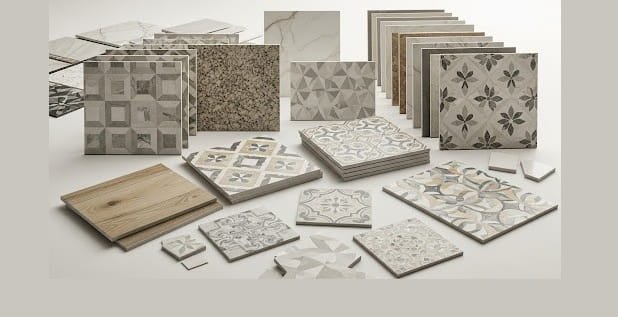
Major Ceramic Tile Manufacturers at a Glance
| Position | Manufacturer | Headquarters | Reported tile output | Reference year |
| 1 | Mohawk Industries | United States | About 300 million m² | 2024 estimate |
| 2 | Grupo Lamosa | Mexico | 195 million m² | 2024 |
| 3 | Marco Polo Holdings | China | 185 million m² | 2024 |
| 4 | Dongpeng Holdings | China | 128 million m² | 2024 |
| 5 | RAK Ceramics | United Arab Emirates | About 118 million m² | 2025 disclosure |
| 6 | Monalisa Group | China | 115 million m² | 2024 |
| 7 | SCG Ceramics / SCG Decor | Thailand | 112 million m² | 2024 |
| 8 | Cerâmica Carmelo Fior | Brazil | 97 million m² | 2024 |
| 9 | Kajaria Ceramics | India | About 91 million m² | 2025 disclosure |
| 10 | Grupo Pamesa | Spain | 87 million m² | 2024 |
Figures are company output, not installed capacity. Different accounting periods are identified; manufacturers without published comparable volumes may also be very large.
1. Mohawk Industries — United States
Mohawk Industries manufactured an estimated 300 million m² of ceramic tiles in 2024. Mohawk’s Global Ceramic division spans the Daltile, Marazzi, American Olean and other brands, with factories across North America, Europe and South America. Large-format porcelain, commercial flooring and residential renovation products serve distinct customers, reducing reliance on any one construction market. Vertical integration supports sourcing, technology and distribution, but heavy kiln energy consumption and subdued renovation demand can pressure margins. The division recorded approximately US$4.2 billion in 2024 sales, a business measure separate from production volume.
2. Grupo Lamosa — Mexico
Grupo Lamosa manufactured approximately 195 million m² of tiles in 2024, compared with installed capacity of about 272 million m². Grupo Lamosa combines a substantial Mexican manufacturing base with plants acquired in South America and Spain. Its portfolio serves affordable housing, home improvement and commercial construction, while overseas operations provide access to several regional currencies and demand cycles. The company’s adhesives operations are an additional business, not ceramic-tile volume. Transport costs, natural-gas pricing and property-sector weakness matter because tiles are bulky and kilns run continuously.
3. Marco Polo Holdings — China
Marco Polo Holdings produced roughly 185 million m² of tiles in 2024, according to industry reporting. Marco Polo is an important Chinese producer of porcelain tiles, decorative surfaces and building ceramics. Through its American Wonder Porcelain manufacturing plant in Tennessee, the group maintains a direct production foothold near North American customers, where ocean freight costs and tariff barriers affect competitiveness. Chinese producers face uneven domestic property demand, creating pressure to shift towards renovation, higher-value formats and export markets. Design flexibility, reliable firing quality and established distribution relationships remain key competitive advantages.
4. Dongpeng Holdings — China
Dongpeng Holdings produced about 128 million m² of tiles in 2024. Dongpeng manufactures wall and floor tiles and other building-surface products, with large-scale industrial capacity in China. The company serves residential developers, distributors and commercial projects, where products must meet slip-resistance, durability and appearance specifications. Demand in the Chinese real-estate sector has made inventory discipline especially important. Investment in digital design, continuous production lines and lower-energy kilns can improve efficiency, but extensive product ranges also complicate scheduling and stock management.
5. RAK Ceramics — United Arab Emirates
RAK Ceramics reported roughly 118 million m² of tile output in a 2025 comparison, a later period than most companies here. Based in Ras Al Khaimah, RAK Ceramics has developed an international manufacturing and distribution network reaching the Middle East, Asia and Europe. Its architectural offering ranges from ordinary ceramic wall tiles to large porcelain slabs, complemented by sanitaryware operations that should not be counted as tile output. Export exposure makes shipping, exchange rates and construction investment significant. Premium surface finishes allow the business to compete beyond basic price-sensitive flooring.
6. Monalisa Group — China
Monalisa Group produced approximately 115 million m² of tiles in 2024. Monalisa operates major ceramic-tile facilities in China and supplies porcelain, ceramic and architectural surface products. The company has invested in large-format slabs, which require precise body preparation and firing to control flatness and defects. Such formats can earn higher selling prices but demand more sophisticated handling, packaging and installation. Domestic residential weakness and export competition encourage closer attention to product differentiation and factory utilisation. Volume alone does not reveal the profitability of its product mix.
7. SCG Ceramics / SCG Decor — Thailand
SCG Ceramics/SCG Decor manufactured about 112 million m² of tiles in 2024. SCG’s ceramics business, associated with brands including COTTO, serves Thailand and neighbouring Southeast Asian markets. The regional business benefits from established retail channels and construction-material distribution, while factories must manage fuel costs and changing consumer preferences. Modern product lines include porcelain formats and coordinated bathroom surfaces. Expansion beyond Thailand can support demand, although differences in local construction cycles and import competition create operational challenges.
8. Cerâmica Carmelo Fior — Brazil
Cerâmica Carmelo Fior produced around 97 million m² of tiles in 2024. Carmelo Fior is among Brazil’s significant ceramic-tile manufacturers. Its scale reflects Brazil’s extensive domestic construction market and specialised ceramic clusters, especially in the south and southeast. Efficient high-volume production helps make flooring accessible to price-conscious buyers. Domestic freight distances, industrial energy and cyclical household investment can strongly affect operating costs. The business illustrates how a manufacturer can reach substantial volume without relying on the same global brand network as European multinationals.
9. Kajaria Ceramics — India
Kajaria Ceramics recorded approximately 91 million m² of annual tile output in a 2025 comparison. Kajaria is one of India’s best-known tile producers, supplying ceramic, vitrified and glazed-vitrified tiles through a broad dealer network. India’s demand comes from urban housing, renovations, commercial property and infrastructure. Manufacturing strength depends on efficient plants, natural-gas availability, consistent glaze quality and relationships with distributors. The Morbi ceramic cluster provides a powerful competitive ecosystem, although it includes numerous independent businesses rather than Kajaria production alone.
10. Grupo Pamesa — Spain
Grupo Pamesa manufactured nearly 87 million m² of tiles in 2024. Pamesa operates in Spain’s Castellón ceramic district, where specialised suppliers, glaze producers, machinery companies and export logistics form a dense industrial network. The group is recognised for porcelain and ceramic tiles serving European and international customers. Strong design capabilities and modern production equipment support quality, but Spanish manufacturers are exposed to European energy prices and construction demand. Export competitiveness also depends on ocean freight, product certification and the ability to offer distinctive finishes.
Industry Developments in 2026
Manufacturers are investing in large porcelain slabs, digitally printed finishes and more efficient firing systems. Electrification, fuel substitution and waste-heat recovery are receiving attention because high-temperature kilns produce significant emissions. At the same time, excess capacity in some markets intensifies price competition. A factory’s square-metre output, manufacturing yield, distribution network and sales per square metre together provide a clearer picture of performance than output alone.
How Production Is Measured
Company volumes draw on Ceramic World Review/MECS industry comparisons and subsequent public disclosures. The table identifies differing years and distinguishes production from capacity, revenue and sanitaryware sales. Some major groups do not publish sufficiently comparable figures, so the ten names should not be read as an exhaustive census of every large producer.
Frequently Asked Questions
Q. What separates porcelain from ordinary ceramic tile?
Porcelain generally has lower water absorption because of its denser composition and firing, making it suitable for demanding floors and some exterior applications.
Q. Why are tiles measured in square metres?
Buyers purchase surface coverage; tonnes would distort comparisons between thin wall tiles, thick floor tiles and large slabs.
Q. Do company production figures include sanitaryware?
Not in this comparison. Sinks, toilets and other sanitary ceramics are separate products even when made by the same group.
Q. Why can capacity exceed production by a wide margin?
Maintenance, weaker orders, product changeovers and energy prices can leave installed kiln capacity unused.