 By Meghna Sharma
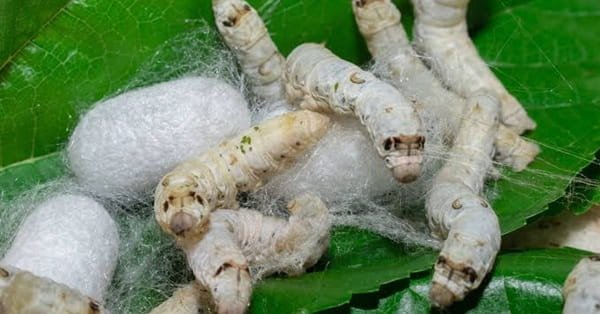
A silk filament begins inside a cocoon spun by a silkworm. In the most common commercial system, Bombyx mori larvae feed on mulberry leaves, form cocoons and produce continuous filaments that are reeled, combined and woven into fabric. Other silks, including tasar, eri and muga, are produced from different moth species and rearing systems. Their fibres differ in colour, texture and suitability for reeling. The farming of silkworms, cocoon collection and conversion into raw silk together constitute sericulture, an industry that combines agriculture, skilled labour and textile processing.
China is the largest producer of raw silk, followed by India, where sericulture supports a large network of rural households and specialised weaving traditions. Uzbekistan and Vietnam contribute smaller but significant quantities. Below those producers, national outputs fall rapidly, making accurate measurement especially important. Cocoon weight is not raw-silk weight: much of a cocoon consists of material that is not converted into marketable reeled filament. A country with considerable cocoon production therefore cannot be ranked alongside another country’s raw silk tonnes without conversion and careful definition.
The latest consistent country series retrieved for the FAO category “Raw silk (not thrown)” covers 2023. It is used for the ranking, while more recent national releases are identified separately. India, for example, reported 41,121 tonnes of raw silk in its 2024–25 financial year, but that later national figure is not inserted into a 2023 international comparison. The title reflects a 2026 industry review, not fabricated 2026 harvest statistics.
Leading Raw Silk Producing Countries
| Rank | Country | Raw silk (tonnes) | Reference year |
| 1 | China | 50,000 | 2023 |
| 2 | India | 38,913 | 2023 / FY2023–24 |
| 3 | Uzbekistan | 2,037 | 2023 |
| 4 | Vietnam | 1,448 | 2023 |
| 5 | North Korea | 370 | 2023 |
| 6 | Brazil | 330 | 2023 |
| 7 | Thailand | 291 | 2023 |
| 8 | Iran | 276 | 2023 |
| 9 | Tajikistan | 172 (rounded) | 2023 |
| 10 | Afghanistan | 49 (rounded) | 2023 |
These are raw silk (not thrown) figures, not fresh cocoon tonnage or silk-fabric exports. Some country records are estimated or carried forward by statistical compilers; the dates and limitations are therefore important.
1. China
China produced an estimated 50,000 tonnes of raw silk in the FAO-based 2023 series, more than half the total recorded for the listed countries. It has developed sophisticated systems for mulberry cultivation, silkworm breeding, cocoon purchasing, reeling and high-quality textile manufacturing. Several historic sericulture regions combine agricultural production with specialised machinery and processing firms. The industry must manage labour costs, cocoon quality and demand from fashion and home-textile customers. China is also an important exporter of silk yarns and fabrics, but those trading volumes should not be confused with raw silk produced domestically.
2. India
India produced 38,913 tonnes of raw silk in 2023–24, making it the world’s second-largest producer. The later government figure increased to 41,121 tonnes in 2024–25, evidence of recent domestic growth rather than a replacement for the international comparison year. India is distinctive for producing mulberry silk alongside tasar, eri and muga. Karnataka, Andhra Pradesh, West Bengal, Tamil Nadu and Jammu and Kashmir are important to mulberry sericulture, while northeastern states contribute significant non-mulberry silk. The sector supports farming, reeling and weaving, but quality improvements require reliable seed, disease management and modern reeling machinery.
3. Uzbekistan
Uzbekistan recorded about 2,037 tonnes of raw silk in the 2023 FAO-based series. Sericulture is an established agricultural activity linked to irrigation-based farming and organised cocoon procurement. Mulberry cultivation provides the food source for silkworms, and reeling converts harvested cocoons into yarn suited to further textile processing. Uzbekistan’s larger cocoon figures sometimes appear in international reports, but they must not be substituted for the much smaller weight of raw silk. Higher-value exports depend on filament consistency, reeling quality and the capacity to develop finished silk products rather than sell only intermediate material.
4. Vietnam
Vietnam produced about 1,448 tonnes of raw silk in 2023, placing fourth. Its silk sector combines silkworm farming, reeling, weaving and traditional craft production. The Central Highlands, including Lâm Đồng and the Bảo Lộc area, have been important to commercial sericulture because growing conditions support mulberry cultivation. Vietnamese producers also import or process fibres and yarns for textile manufacture, so exports alone are an unreliable production measure. Better cocoon grading, appropriate reeling equipment and stable producer prices can help raise quality while maintaining the incomes of specialist farming communities.
5. North Korea
North Korea’s raw silk production was listed at approximately 370 tonnes in 2023. Sericulture has a longstanding place in the country’s agricultural and light-industrial activities, but detailed recent statistical reporting is limited. The estimate indicates a much smaller industry than those of China or India. Assessing output requires particular caution because published figures may rely on extrapolation or older information rather than a comprehensive contemporary census. The number should be treated as an indicative entry in the international series, not as a verified statement about individual mills, export destinations or operating capacity.
6. Brazil
Brazil produced about 330 tonnes of raw silk in 2023, according to the FAO-based comparison. Paraná has been an important centre of Brazilian sericulture, where mulberry farming and cocoon supply connect rural producers to industrial reeling. Brazil’s industry is modest in global tonnage but has sought to compete on reliable quality and organised production relationships. Commercial performance depends on silkworm health, farm labour and the ability of reeling operations to maintain uniform filaments. Brazilian cocoon production may be reported separately in significantly greater tonnages; the 330-tonne number represents raw silk, not harvested cocoons.
7. Thailand
Thailand produced approximately 291 tonnes of raw silk in 2023. Thai silk is closely associated with traditional weaving, regional designs and smaller-scale rural sericulture, particularly in the northeast. The sector includes both commercial reeling and handcrafted textiles, whose cultural and market value is not captured by the relatively small national raw-silk tonnage. Local production can also differ in technique and fibre character from standard industrial mulberry reeling. Improvements in silkworm breeding and disease control support higher yields, while authenticity, traceability and weaving skill remain important to premium products sold domestically and internationally.
8. Iran
Iran’s estimated raw silk production was 276 tonnes in 2023. Sericulture is associated with northern growing areas, notably around Gilan, where mulberry trees and silkworm rearing have a long history. Farms supply cocoons for reeling and silk weaving, but the sector is comparatively small and faces competition from imported yarn and other fibres. Producer economics depend on disease-resistant silkworm stock, cocoon purchasing arrangements and access to processing machinery. Iran’s silk textiles and carpets have commercial significance, yet the value of finished products is not a valid substitute for annual raw-silk output.
9. Tajikistan
Tajikistan recorded about 172 tonnes of raw silk in 2023. Silk farming is linked to mulberry cultivation and rural household work, with production shaped by access to water, silkworm eggs and local cocoon buying arrangements. The country’s industry is much smaller than Uzbekistan’s, and some regional statistics emphasise the weight of cocoons rather than reeled silk. Expanding textile value added requires investment in grading, reeling and reliable marketing links. The rounded 2023 FAO figure offers a comparable output measure, but should not be interpreted as evidence that production has stayed unchanged in every later year.
10. Afghanistan
Afghanistan produced about 49 tonnes of raw silk in the 2023 FAO-based series, narrowly ahead of Kyrgyzstan’s approximately 48 tonnes. Silk farming has historical connections to areas such as Herat, where mulberry cultivation and craft activity have supported household livelihoods. Output is limited and potentially volatile because agricultural services, irrigation, market access and security conditions vary. Traditional weaving may use both locally produced and traded yarn, so the existence of finished silk goods does not establish an equivalent domestic raw-silk harvest. The very small margin over the next-ranked country makes this position sensitive to statistical revisions.
Silk Industry Developments in 2026
The modern silk sector faces two challenges: sustaining skilled sericulture livelihoods and meeting demands for consistent, traceable yarn. Temperature variation and silkworm diseases can damage cocoon yields, while reeling quality depends on careful sorting and handling. Modern automatic reeling improves filament consistency, but traditional production remains central to many regional textiles. India’s government reported a rise in raw-silk output to 41,121 tonnes during 2024–25, including progress in higher-grade bivoltine mulberry silk. China remains the largest raw-silk source in available international comparisons. At the same time, the small output of countries below fourth place means annual weather or purchasing changes can easily alter the lower rankings.
Why Silk Statistics Need Care
The table draws on FAOSTAT’s category “Raw silk (not thrown),” production quantity, as presented in a consistent 2023 series. That is different from “silk-worm cocoons suitable for reeling,” which records the heavier agricultural input and can create dramatically different country totals. India’s 2024–25 result is a later national fiscal-year disclosure. Values below one thousand tonnes are rounded for presentation, and older or imputed national observations may be revised.
Frequently Asked Questions
Q. What happens if a silk moth emerges before its cocoon is reeled?
The emerging moth opens the cocoon and breaks the long, continuous filament. The remaining fibre can still be combed and spun, but it cannot generally be reeled as an unbroken strand. Eri silk, for example, is commonly made into spun yarn rather than conventional reeled filament silk.
Q. What does denier mean when grading silk thread?
Denier is a measure of yarn fineness based on the mass, in grams, of 9,000 metres of yarn. A lower denier generally indicates a finer thread. It does not by itself establish strength, cleanliness or overall quality, which are assessed through additional tests.
Q. Why does raw silk lose weight during degumming?
Raw silk contains sericin, a natural gum surrounding the fibroin filament. Degumming removes much of this gum to produce a softer feel and clearer lustre. Since sericin accounts for a substantial share of raw silk’s mass, the finished material weighs less after processing.
Q. What is pebrine, and why are silkworm eggs screened for it?
Pebrine is a serious silkworm disease caused by microsporidian infection. It can pass from infected moths to their offspring and damage an entire rearing crop. Testing breeding moths, using disease-free eggs and keeping rearing facilities clean are central safeguards in commercial sericulture.