 By Santosh Kumar
Cement is not something most people notice, but it is everywhere around us. It is inside the roads we travel on, the bridges we cross, the homes we live in, the metro pillars we stand under, and the factories that build modern economies. Before concrete becomes strong enough to shape cities, cement begins the work silently.
For this 2026 ranking, the latest USGS Mineral Commodity Summaries 2026 data has been used. The figures are based on cement production in 2025, measured in metric tons. According to USGS, global cement production was about 3.8 billion metric tons, with China and India far ahead of the rest of the world.
Now let’s check out the top 10 largest cement producers in the world.
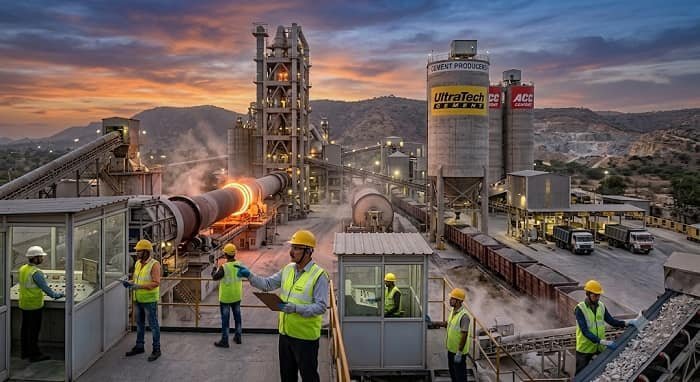
1. China – Around 1.7 Billion Metric Tons
China remains the cement giant of the world because of its huge construction base and massive infrastructure network.
China ranks first by a very large margin. Its cement production is bigger than the combined output of many major countries. Cement is used in China’s housing projects, highways, bridges, industrial parks, railways, ports and urban development. Even though China’s construction sector has slowed compared with its peak years, the country still dominates global cement production.
2. India – Around 470 Million Metric Tons
India is the second-largest cement producer, powered by housing, roads, railways and fast infrastructure growth.
India holds second place in the world. The country’s cement demand comes from highways, metro projects, smart cities, affordable housing, industrial corridors, real estate and rural construction. Major cement-producing states include Rajasthan, Andhra Pradesh, Telangana, Tamil Nadu, Karnataka, Madhya Pradesh and Gujarat. With rising urbanization and government-backed infrastructure spending, India’s cement industry continues to grow strongly.
3. Vietnam – Around 100 Million Metric Tons
Vietnam is a major cement producer with strong domestic capacity and a powerful export presence.
Vietnam ranks third among the largest cement-producing countries. The country has built a large cement manufacturing base over the years, supported by limestone resources and strong industrial development. Vietnamese cement is used at home and also exported to several Asian and global markets. Its high production makes Vietnam one of the most important cement players outside China and India.
4. Turkey – Around 89 Million Metric Tons
Turkey stands out because of its strong construction sector and strategic export location.
Turkey is the fourth-largest cement producer in the world. Its cement industry benefits from domestic construction demand as well as access to Europe, the Middle East, Africa and nearby markets. Turkish cement is used in housing, roads, commercial buildings and infrastructure projects. The country also has a strong export-oriented cement industry, especially through coastal plants.
5. United States – Around 84 Million Metric Tons
The United States remains a leading cement producer because of its large construction and infrastructure market.
The United States ranks fifth globally. Cement is produced across many states, with Texas, Missouri, California and Florida among the leading cement-producing states in 2025. USGS notes that these four states accounted for about 44% of U.S. cement output. Cement demand in the country comes from ready-mixed concrete, highways, buildings, public works and industrial construction.
6. Iran – Around 68 Million Metric Tons
Iran has a strong cement industry supported by local raw materials and regional construction demand.
Iran ranks sixth in the world. Cement is important for its housing, road, industrial and infrastructure sectors. The country has significant limestone resources and a large domestic cement manufacturing base. Iran also exports cement to nearby countries, although trade conditions can change because of sanctions, transport costs and regional market pressure.
7. Brazil – Around 67 Million Metric Tons
Brazil is Latin America’s largest cement producer and a key supplier for housing and infrastructure.
Brazil holds seventh place in global cement production. Its demand is linked with housing, roads, commercial buildings, public works and industrial projects. The country’s large population and urban base keep cement important for long-term development. Brazil’s cement industry also reflects the wider movement of Latin America’s construction economy.
8. Indonesia – Around 64 Million Metric Tons
Indonesia’s cement production is supported by its large population and constant need for housing and infrastructure.
Indonesia ranks eighth among the largest cement producers. As an island nation with fast urban growth, it needs cement for roads, ports, housing, bridges, public buildings and industrial projects. The country has several large cement companies and strong domestic capacity. However, demand can vary depending on construction cycles and government infrastructure spending.
9. Egypt – Around 64 Million Metric Tons
Egypt is one of Africa’s strongest cement producers, helped by large projects and urban expansion.
Egypt shares a similar production level with Indonesia in the latest USGS data. The country’s cement sector supports housing, highways, new city projects, commercial development and public infrastructure. Egypt has a large domestic market and is also positioned well for regional supply across parts of Africa and the Middle East.
10. Russia – Around 59 Million Metric Tons
Russia completes the top 10 with cement demand linked to housing, industry and large regional infrastructure needs.
Russia ranks tenth among the world’s largest cement producers. Its cement industry supports construction across a very large land area, from cities and roads to industrial and energy projects. Production is affected by domestic demand, infrastructure investment, logistics and economic conditions, but Russia still remains one of the major cement-producing nations.
Final Words
Cement production clearly shows where large-scale construction and infrastructure activity is strongest. China leads the world by a huge margin, India is firmly in second place, and Vietnam, Turkey and the United States complete the top five. Iran, Brazil, Indonesia, Egypt and Russia make up the rest of the top 10. In 2026, these countries remain the main pillars of the global cement industry.