 By Meghna Sharma
Natural stone is quarried rather than manufactured, but turning rock into an architectural product is an exacting industrial process. Diamond-wire saws and drilling equipment separate large blocks from bedrock; cutting plants then produce slabs and tiles, which may be polished, honed, brushed or left with a textured finish. Marble is metamorphosed limestone, granite is an igneous rock and travertine is a form of deposited limestone. Their chemistry, grain structure and porosity influence suitability for floors, cladding, monuments, countertops and outdoor paving. A quarry’s commercial value depends on the amount of sound, attractive material that can be recovered, not simply the volume of rock present.
International comparisons need careful handling. There is no complete, consistent 2025 or 2026 dataset recording every country’s total marble, granite and other dimension-stone quarry output. USGS’s 2026 dimension-stone chapter does not publish a world country table. Customs data measure particular stone products crossing borders, not all stone quarried or consumed domestically. The ten countries below have substantial quarrying and processing industries; specific 2024 trade figures are identified by product category rather than presented as interchangeable national production totals.
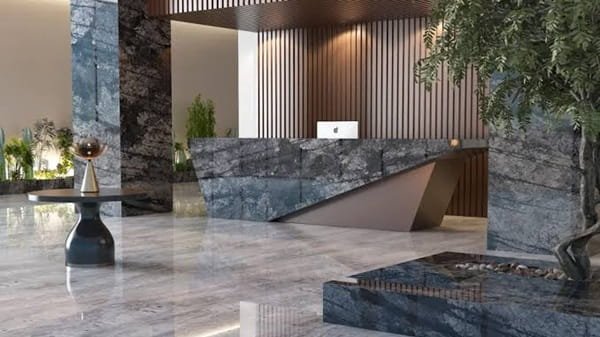
Major Natural Stone and Marble Producing Countries
| Country | Important stones | Major production areas | Verified 2024 trade example |
| China | Granite, marble, limestone | Fujian, Shandong, Guangdong | Worked marble HS 680291: US$1.16bn exports |
| India | Granite, marble, sandstone | Rajasthan, Andhra Pradesh, Karnataka | Cut granite HS 680223: US$712.4m exports |
| Türkiye | Marble, travertine, limestone | Afyon, Denizli, Burdur | Marble blocks HS 251512: US$585.9m exports |
| Italy | Carrara marble, limestone, travertine | Tuscany, Veneto, Lazio | Worked marble HS 680291: US$844.4m exports |
| Brazil | Granite, quartzite, marble | Espírito Santo, Minas Gerais | Natural stone exports, all covered types: US$1.263bn (2024) |
| Iran | Travertine, marble, onyx | Isfahan, Yazd, Markazi | Marble/travertine exports: ~420,000 tonnes (2024 estimate) |
| Egypt | Limestone, marble, granite | Galala, Aswan, Minya | Cut marble HS 680221: US$372.5m exports |
| Spain | Marble, slate, granite | Alicante, Galicia, Castilla y León | Natural stone exports: €754.4m (2025) |
| Portugal | Limestone, marble, granite | Estremoz, Alentejo, northern Portugal | Cut granite HS 680223: US$53.0m exports |
| Greece | White marble, limestone | Thassos, Drama, Macedonia | Cut marble HS 680221: US$161.1m exports |
Statistics show different customs categories or national stone-sector export totals and cannot be used to order countries by quarry tonnage. Brazilian and Spanish figures include multiple stone products; Iran’s estimate covers marble/travertine exports only.
1. China
China exported about US$1.16 billion of worked marble and related stone under HS 680291 in 2024; this is export value, not quarry tonnage. China combines natural-stone quarrying with a vast cutting, polishing and finishing industry. Fujian and Shandong are known for granite processing, while other provinces supply marble and limestone. The country’s manufacturing infrastructure makes it an important supplier of polished slabs, tiles and custom architectural pieces. Environmental enforcement, factory energy costs and international demand influence production, while imported blocks also feed Chinese processing facilities.
2. India
India exported US$712.4 million of cut or sawn granite under HS 680223 in 2024, equivalent to roughly 1.75 million tonnes of that product. India’s stone industry is geographically diverse. Rajasthan supplies marble, sandstone and other decorative stone, while Karnataka and Andhra Pradesh are important granite regions. Rajasthan’s Makrana marble is known for a long history in monumental architecture. Quarry operators must manage block recovery, dust, worker safety and transport from inland mines to export ports. India’s sizeable domestic construction market means exports represent only part of overall activity.
3. Türkiye
Türkiye exported US$585.9 million of merely cut marble and travertine under HS 251512 in 2024, weighing more than 3 million tonnes. Türkiye is a major source of marble and travertine, with productive stone districts around Afyonkarahisar, Denizli and Burdur. Large blocks are exported to overseas processors, while Turkish factories also supply finished slabs, tiles and architectural elements. That figure is a product-specific trade flow, not national marble output. Producers face variations in quarry yields, freight expenses and global building demand; attractive colours and reliable block dimensions help sustain export relationships.
4. Italy
Italy exported US$844.4 million of worked marble and related stone under HS 680291 in 2024. Italy’s stone industry is closely associated with Carrara’s white marble, but the country also produces travertine, limestone and granite. Advanced cutting technology, design expertise and stone-finishing machinery support a sophisticated processing cluster. Some finished Italian products are made from imported blocks, so their export value must not be mistaken for the weight quarried inside Italy. Firms compete through precision fabrication, premium architectural applications and technical advice for complex installations.
5. Brazil
Brazil exported approximately US$1.263 billion of natural stone in 2024, amounting to about 2.05 million tonnes of exports. Brazil is an important granite and exotic-stone supplier, with major quarrying and processing in Espírito Santo and Minas Gerais. Its products include commercial granites and highly patterned quartzites marketed for interior surfaces. The sector serves export demand for countertops and architectural slabs, often transporting heavy blocks over considerable distances. Commercial quality depends on consistent colour, limited fracturing and high recovery rates from the quarry face. Brazil’s quarry industry must also address permitting, water use, dust and safe transport. Quartzite and granite should not be conflated with engineered quartz surfaces, which are manufactured composites.
6. Iran
Iran exported an estimated 420,000 tonnes of marble and travertine in 2024, according to a regional market assessment; this is not overall quarry output. Iran has extensive resources of travertine, marble, onyx and other decorative stones. Quarrying districts include Isfahan, Yazd and parts of Markazi province, supported by numerous domestic processing workshops. Iranian travertine is used for external façades, where texture and appearance are commercially important. The industry’s competitiveness is affected by modern machinery access, transportation and restrictions on international financial transactions. Quality can differ substantially among neighbouring quarry benches, making block selection and finishing skill essential. Much production is sold domestically or through complex trade channels, limiting reliable international volume comparisons.
7. Egypt
Egypt exported US$372.5 million of cut marble and related stone under HS 680221 in 2024. Egypt produces limestone, marble and granite for domestic building, monuments and export markets. Galala and Minya are associated with calcareous stones, while Aswan has long been linked to granite. Industrial zones and processing facilities convert quarry blocks into tiles and finished architectural components. Export performance depends on surface finish, dimensional tolerances and port access. Cutting and polishing create waste slurry that must be managed to reduce environmental and workplace impacts.
8. Spain
Spain exported approximately €754.4 million of natural stone in 2025, according to its national industry association. Spain has established stone districts producing marble, granite and slate. Alicante is associated with marble, while Galicia is a notable granite and slate centre. Natural slate is particularly useful for roofing because suitable stone splits into thin, durable layers. Producers also supply paving, wall cladding and interior tiles. Spanish businesses compete on both material character and finishing quality, serving construction markets across Europe and beyond. Quarrying can be costly where deposits occur in steep terrain or require strict environmental controls. The durability of stone gives it long service life when installed with suitable detailing.
9. Portugal
Portugal exported about US$53.0 million of cut or sawn granite under HS 680223 in 2024. Portugal’s natural-stone industry includes the marble districts around Estremoz and Borba, limestone in central regions and granite in the north. The country serves domestic construction and a longstanding export trade in blocks, slabs and finished stone. Skilled extraction and surface finishing matter because fissures can reduce the amount of marketable slab recovered. Architectural projects often seek Portuguese limestone for its comparatively uniform appearance and workability.
10. Greece
Greece exported approximately US$161.1 million of cut marble and related stone under HS 680221 in 2024. Greece is known for bright white and pale marble from Thassos and northern production areas around Drama and Macedonia. Stone is used in flooring, cladding, monuments and premium interior applications, both domestically and abroad. Large export blocks must be carefully selected to avoid internal defects and maintain predictable colour. Producers balance high-value architectural demand against quarry waste, transport costs and environmental rehabilitation obligations in sensitive landscapes.
Industry Developments in 2026
Digital slab scanning, precision cutting and water recycling reduce waste in quarrying and fabrication. Export markets distinguish blocks from polished slabs and ready-to-install pieces. Quarry rehabilitation, worker exposure to dust and long-distance transport are persistent concerns. Porcelain and engineered surfaces also compete with natural stone.
Understanding Stone Production and Trade
The USGS 2026 dimension-stone summary provides no harmonised national output table. WITS/UN Comtrade statistics, national stone associations and published market estimates supply the individual trade indicators. Products and years differ, so the values cannot establish an exact quarry-production ranking. Crushed aggregate is excluded.
Frequently Asked Questions
Q. Is marble the same as granite?
No. Marble forms by metamorphism of carbonate rock; granite crystallises from magma and generally contains quartz and feldspar.
Q. Why does a quarry’s total tonnage differ from saleable production?
Fractures, colour variation and cutting losses can leave substantial rock unsuitable for commercial slabs.
Q. Can polished-stone exports exceed locally quarried supply?
Yes. Processing centres may import raw blocks, finish them and re-export the products.
Q. How does natural stone compare with engineered stone?
Natural stone is quarried rock; engineered products combine mineral particles with binders and have different manufacturing and performance characteristics.