 By Saurav Mehra
 Pushkar Enclave is a well-established residential enclave in Paschim Vihar, West Delhi, known for its gated community character, independent houses, low-rise builder floors and a strong neighbourhood identity. Unlike many developments where the word ‘Enclave’ is only part of a project name, Pushkar Enclave is an organised residential society with its own managing committee, central park and internal layout. The residents’ association states that the enclave covers about 0.16 sq. km and contains 203 houses, making it a compact but clearly defined residential pocket within the larger Paschim Vihar area.
The locality combines quiet residential streets with the advantages of an established West Delhi address. Jwala Heri Market, Paschim Vihar’s schools and hospitals, the Green Line metro corridor and major roads such as the Outer Ring Road and Rohtak Road are all accessible nearby. The society traces its origin to 1958, when it was formed as the Industrial Workers Cooperative House Building Society Ltd., giving Pushkar Enclave a much longer residential history than most newly branded gated developments.
Pushkar Enclave Quick Overview
| Particular | Details |
| Locality | Pushkar Enclave, Paschim Vihar |
| District | West Delhi |
| PIN Code | 110063 |
| Area Type | Established registered residential enclave / cooperative house-building society |
| Former Name | Industrial Workers Cooperative House Building Society Ltd. |
| Society Origin | 1958 |
| Approx. Area | 0.16 sq. km |
| Number of Houses | 203 |
| Housing Character | Independent houses, builder floors and low-rise residences |
| Nearby Metro | Paschim Vihar East and Paschim Vihar West |
| Metro Line | Green Line |
| Major Roads | Outer Ring Road and Rohtak Road corridor |
| Schools Nearby | Saraswati Bal Mandir, GD Goenka Public School, St. Froebel School, Neo Convent School |
| Higher Education | Bharati Vidyapeeth New Delhi campus |
| Major Healthcare | Sri Balaji Action Medical Institute |
| Shopping | Jwala Heri Market and Paschim Vihar local markets |
| Nearby Areas | Paschim Vihar, Sunder Vihar, Meera Bagh, Jwala Heri, Punjabi Bagh |
| Known For | Gated residential setting, central park, established community and West Delhi connectivity |
Where Is Pushkar Enclave Located?
Pushkar Enclave is situated in Paschim Vihar, West Delhi, with the society office located in the enclave’s Central Park. Current society and company addresses consistently use Pushkar Enclave, Paschim Vihar, New Delhi 110063. The neighbourhood sits close to Jwala Heri and the Outer Ring Road side of Paschim Vihar, giving residents quick access to established shopping and transport corridors.
Important surrounding areas include:
- Paschim Vihar
- Jwala Heri
- Sunder Vihar
- Meera Bagh
- Punjabi Bagh
- Madipur
- Peeragarhi
Its position makes it especially practical for households whose daily travel is concentrated in West Delhi, North West Delhi or central Delhi.
Why Is Pushkar Enclave Known?
Pushkar Enclave is mainly known for:
- A distinct registered residential-society identity rather than a single building or apartment project.
- About 203 houses within a compact 0.16 sq. km neighbourhood.
- A community history dating back to 1958.
- Independent houses and low-rise builder-floor development.
- Gated access with security arrangements.
- A large central park with walking and recreation facilities.
- Proximity to Jwala Heri Market.
- Green Line metro access through Paschim Vihar stations.
- Established schools and healthcare within the wider 110063 area.
- Easy access to Paschim Vihar’s commercial and institutional infrastructure.
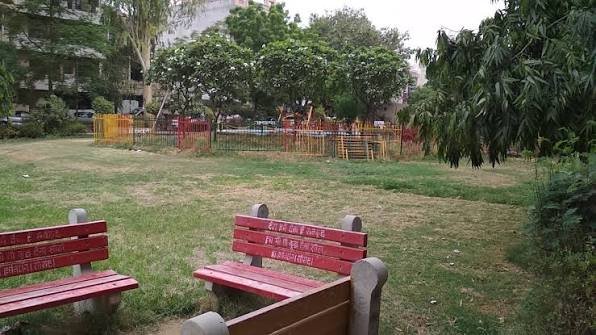
The residents’ society describes the central park as an important community space with a children’s play area, open gym, covered seating, badminton facility and walking path. This organised internal community environment is one of the enclave’s distinguishing features.
Metro Connectivity
Pushkar Enclave benefits from Delhi Metro’s Green Line, with Paschim Vihar East and Paschim Vihar West serving the wider neighbourhood. The most convenient station depends on the exact house location and the direction of travel.
Paschim Vihar East Metro Station
Paschim Vihar East is useful for travel towards Madipur, Shivaji Park, Punjabi Bagh and Ashok Park Main. The Green Line continues westward through Paschim Vihar West, Peera Garhi, Udyog Nagar, Nangloi and Mundka.
Paschim Vihar West Metro Station
Paschim Vihar West is another practical option, especially for residents travelling towards Peeragarhi or outer West Delhi. The two stations give households flexibility depending on traffic and the starting point within the enclave.
At Ashok Park Main, passengers can use interchange options for onward travel towards other parts of the Delhi Metro network.
Road and Public Transport Connectivity
Road connectivity is another major advantage. Pushkar Enclave lies close to the Outer Ring Road side of Paschim Vihar, while Rohtak Road and the wider West Delhi road network provide access towards Punjabi Bagh, Peeragarhi, Rajouri Garden, Janakpuri, Rohini and central Delhi.
Residents can use:
- Outer Ring Road for cross-West Delhi movement.
- Rohtak Road corridor towards Punjabi Bagh and outer West Delhi.
- Road connections towards Peeragarhi and Nangloi.
- Routes towards Rajouri Garden, Janakpuri and Tilak Nagar.
- DTC buses on surrounding arterial roads.
- Autos and e-rickshaws for local trips and metro access.
- App-based cabs for longer city journeys.
Traffic can become heavy around major Paschim Vihar junctions during office and school hours, so having two Green Line stations in the wider locality is useful for regular commuters.
Residential Market and Housing Options
Pushkar Enclave has a distinctly low-rise residential profile. Its original cooperative house-building layout has gradually evolved as individual plots have been renovated or redeveloped, creating a mix of older independent houses and newer builder-floor properties.
Common housing options include:
- Independent houses.
- Redeveloped builder floors.
- 2 BHK and 3 BHK family homes.
- Larger 4 BHK floors in redeveloped properties.
- Resale houses and floors.
- Rental homes for families and professionals.
Current property platforms classify Pushkar Enclave as a separate Paschim Vihar sublocality and show both sale and rental inventory. Because redevelopment has occurred plot by plot, building age, parking, lift availability and specifications can vary considerably.
Buyers should verify title and conveyance documents, sanctioned building plans, floor rights, parking rights, property-tax records and any society dues for the exact property. Tenants should confirm maintenance, parking and access arrangements before finalising a lease.
Schools, Colleges, Hospitals and Everyday Facilities
Schools Nearby
- Saraswati Bal Mandir – A-2 Paschim Vihar; CBSE senior secondary school.
- GD Goenka Public School – A-2 Paschim Vihar; CBSE senior secondary school.
- Froebel School – A-3 Paschim Vihar; CBSE senior secondary school.
- Neo Convent School – G-17 area, Paschim Vihar; CBSE senior secondary school.
- Government Co-Ed Senior Secondary School – A-6 Paschim Vihar.
Higher Education
Bharati Vidyapeeth has a major New Delhi campus in Paschim Vihar on New Rohtak Road. The campus spreads across about eight acres and includes institutions for engineering, computer applications and management, making it one of the locality’s important educational landmarks.
Hospitals and Healthcare
The most prominent hospital in the immediate Paschim Vihar belt is Sri Balaji Action Medical Institute at A-4 Paschim Vihar. The hospital describes itself as a 275-bed multi-speciality facility with 24-hour emergency services and a broad range of specialties.
- Sri Balaji Action Medical Institute – A-4 Paschim Vihar.
- Delhi Government dispensary / West district health facility at A-2 Paschim Vihar.
- Private clinics, pharmacies and diagnostic centres throughout Paschim Vihar.
- Fortis Hospital Shalimar Bagh for a larger multispeciality option in North West Delhi.
Shopping and Everyday Facilities
Jwala Heri Market is one of the most important shopping destinations near Pushkar Enclave. The residents’ society itself identifies Jwala Heri among the enclave’s nearby landmarks. The wider Paschim Vihar area also has neighbourhood markets, supermarkets, pharmacies, restaurants, banks and service businesses.
- Jwala Heri Market.
- Local Paschim Vihar markets.
- Grocery and convenience stores.
- Pharmacies and diagnostic services.
- Restaurants, cafés and takeaway outlets.
- Commercial facilities around Peeragarhi and Punjabi Bagh.
Employment and Business Hubs Nearby
Pushkar Enclave is residential, but several established West Delhi commercial districts are accessible by road and metro.
- Paschim Vihar District Centre and local commercial areas.
- Shivaji Place / Raja Garden District Centre.
- Janakpuri District Centre.
- Netaji Subhash Place (Wazirpur) for larger office and commercial employment.
- Punjabi Bagh and Rajouri Garden for retail, hospitality and professional services.
- Kirti Nagar for trading, furniture and commercial businesses.
DDA identifies Janakpuri, Shivaji Place and Netaji Subhash Place among Delhi’s developed District Centres, while current DDA records also include a Paschim Vihar District Centre layout.
Nearby Areas Around Pushkar Enclave
- Paschim Vihar – the larger established West Delhi neighbourhood containing Pushkar Enclave.
- Jwala Heri – a busy nearby market and residential-commercial pocket.
- Sunder Vihar – established residential locality close to Paschim Vihar.
- Meera Bagh – premium residential pocket in the wider Paschim Vihar belt.
- Punjabi Bagh – major residential and commercial destination towards central West Delhi.
- Madipur – nearby locality with Green Line metro access.
- Peeragarhi – major road and metro node towards outer West Delhi.
FAQs
Q1. Is Pushkar Enclave a genuine enclave or only a project name?
Yes. Pushkar Enclave is a genuine registered residential society/locality in Paschim Vihar. Its residents’ association identifies it as the Industrial Workers Cooperative House Building Society Ltd., with 203 houses and its own society office in Central Park.
Q2. What was Pushkar Enclave originally called?
The society states that it was founded in 1958 as the Industrial Workers Cooperative House Building Society Ltd. and later became widely known as Pushkar Enclave.
Q3. Which metro stations are useful for Pushkar Enclave?
Paschim Vihar East and Paschim Vihar West on the Green Line are the main metro options serving the wider locality. The preferred station depends on the exact house and travel direction.
Q4. Is Pushkar Enclave mainly a high-rise apartment area?
No. Independent houses and low-rise builder floors are more characteristic. Redevelopment has introduced newer multi-floor homes, but large high-rise township projects are not the dominant housing format.
Q5. What should buyers check before purchasing a floor or house?
Check the title and conveyance chain, sanctioned building plan, exact floor rights, parking, society dues, property-tax records and any redevelopment-related approvals. Because properties have been redeveloped individually, documentation and building specifications can differ from one house to another.