 By Meghna Sharma
Hydropower has an unusual position in the global energy transition. It is one of the oldest large-scale sources of renewable electricity, yet it is becoming more valuable as modern power systems add wind farms and solar panels. Unlike weather-dependent generators, many reservoir-based hydropower stations can adjust output within minutes, helping electricity networks meet evening demand, respond to sudden shortages and reduce dependence on imported fuels.
Its scale remains enormous. Hydropower generated approximately 4,437 terawatt-hours (TWh) worldwide in 2025, according to Ember’s Global Electricity Review 2026. That was a record in absolute output, although hydro’s share of global electricity slipped to about 14% as demand and other generating technologies grew faster. Rainfall also changed national results: China and India increased production, while drought reduced output in Brazil and parts of Europe. Meanwhile, pumped-storage investment is expanding the value of water-based electricity systems beyond conventional generation.
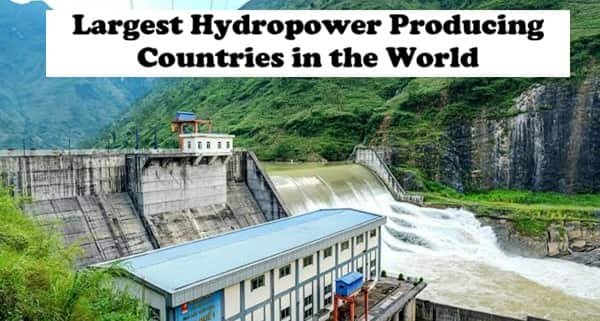
The world’s leading producers are therefore distinguished not only by their dams and river systems, but also by how they manage drought, environmental requirements, transmission networks and competing water needs. Now let’s check out the top 10 largest hydropower producing countries in the world in 2026.
Top 10 Hydropower Producing Countries: Latest Ranking
| Rank | Country | Hydropower Generation in 2025 (TWh) | Share of National Electricity |
| 1 | China | 1,399 | About 13% |
| 2 | Brazil | 389 | About 52% |
| 3 | Canada | 345 | About 53% |
| 4 | United States | 242 | About 5% |
| 5 | Russia | 200 | About 17% |
| 6 | India | 178 | 8.6% |
| 7 | Norway | 145 | About 90% |
| 8 | Vietnam | 102 | About 31% |
| 9 | Japan | 74 | About 7% |
| 10 | Sweden | 68 | About 40% |
Ranking uses calendar-year 2025 hydroelectricity generation, the latest complete year for a comparable 2026 assessment. Figures are rounded. The ten countries are compared on the same reporting year; details on revisions and Venezuela’s older observation appear below.
1. China — 1,399 TWh
China generates substantially more hydropower than any other country. The Yangtze basin and its tributaries support enormous projects, including Three Gorges, Baihetan and Xiluodu. Hydropower development is also concentrated in mountainous southwestern provinces such as Sichuan and Yunnan, where steep river gradients create favourable generating conditions.
Although hydro represents only about 13% of China’s huge electricity supply, it plays a strategic role in moving clean power to industrial centres and balancing the country’s rapidly expanding solar and wind fleet. Output rose by roughly 45 TWh in 2025 amid improved rainfall and additional capacity. Transmission investment, water availability and ecological safeguards remain important constraints.
2. Brazil — 389 TWh
Brazil’s electricity system has long been built around large reservoirs and major rivers. Itaipu, operated jointly with Paraguay on the Paraná River, is one of its best-known hydropower assets. Belo Monte on the Xingu and Tucuruí on the Tocantins also contribute substantial electricity.
Hydropower supplied around 52% of Brazil’s electricity in 2025, making water conditions unusually influential over national power prices and fuel requirements. Output fell by approximately 25 TWh during the year as drought and operating factors affected generation. Brazil’s challenge is to preserve reservoir flexibility while expanding wind, solar and transmission capacity without worsening impacts on sensitive river ecosystems.
3. Canada — 345 TWh
Canada benefits from extensive rivers, large reservoirs and decades of investment in hydroelectric infrastructure. Quebec’s La Grande complex, British Columbia’s Peace and Columbia river facilities, and Manitoba’s Nelson River stations are important generating centres.
Hydropower contributed roughly 53% of Canadian electricity in 2025. It also supports cross-border trade, including electricity exports to the United States, although export volumes depend on reservoir conditions and market prices. Drought-related weakness in earlier years showed that a hydro-rich country is not immune to water shortages. The industry’s priorities include maintaining ageing equipment, meeting Indigenous and environmental obligations, and improving transmission links between provinces.
4. United States — 242 TWh
American hydropower is spread across the Columbia and Snake river systems, the Colorado River and numerous other watersheds. Major facilities include Grand Coulee in Washington, Hoover Dam on the Arizona–Nevada border, and generators operated by the Tennessee Valley Authority.
Hydroelectricity supplied roughly 5% of US power in 2025, a relatively small share of a large and diversified electricity system. Existing dams nevertheless provide flexible generation and valuable grid services. Western drought, reservoir management, fish passage and ageing infrastructure shape investment decisions. Upgrading turbines and adding generation at suitable existing dams can offer opportunities without building entirely new reservoirs.
5. Russia — 200 TWh
Russia’s largest hydroelectric assets draw on powerful Siberian river systems. Sayano-Shushenskaya and Krasnoyarsk operate on the Yenisei, while Bratsk and Ust-Ilimsk harness the Angara. Hydropower also supports electricity supply in parts of the Russian Far East.
Generating around 17% of national electricity in 2025, these stations provide relatively low-cost power for industry, including energy-intensive metals production. Their large reservoirs help regulate seasonal supply, but construction and maintenance in remote regions can be expensive. Operational safety, transmission capacity and changing river flows are significant long-term concerns.
6. India — 178 TWh
India’s major hydropower resources lie in Himalayan river valleys and the Western Ghats. Projects such as Tehri on the Bhagirathi, Nathpa Jhakri on the Sutlej and Koyna in Maharashtra illustrate the country’s diverse geography. Several large stations also provide irrigation and water-management benefits.
Hydro generation reached a record 178 TWh in 2025, approximately 21 TWh above the previous year, helped by stronger monsoon rainfall and new capacity. Even so, its share of national electricity was about 8.6%. India is prioritising flexible hydro and pumped-storage development to complement growing solar output. Landslide exposure, sedimentation, resettlement and lengthy approvals complicate project execution, particularly in mountain regions.
7. Norway — 145 TWh
Norway’s steep terrain, high rainfall and extensive reservoir network make hydropower the foundation of its electricity system. Large facilities include Kvilldal within the Ulla-Førre system and the Sima power stations. Stored water allows operators to adjust generation as demand and market conditions change.
Hydropower provided around 90% of Norwegian electricity in 2025, an exceptional share among large-producing countries. Interconnections with neighbouring Nordic and European markets give reservoir flexibility additional value. However, water levels, seasonal snowmelt and changing weather patterns directly influence generation decisions. Modernisation often focuses on improving the performance of existing plants while protecting river habitats.
8. Vietnam — 102 TWh
Vietnam’s hydropower industry is centred on northern mountain rivers and the Central Highlands. Son La, Hòa Bình and Lai Châu on the Đà River are among the country’s prominent projects, while the Ialy station serves the Central Highlands region.
Hydro generated approximately 102 TWh in 2025, supplying around 31% of Vietnamese electricity. It helps support a manufacturing-led economy with rapidly growing power requirements and complements new solar and wind resources. Production remains sensitive to monsoon conditions, drought and reservoir management. Greater grid flexibility and careful coordination between flood control and electricity generation are essential as demand expands.
9. Japan — 74 TWh
Japan’s mountainous landscape gives it numerous hydroelectric sites, although much of its large conventional resource was developed decades ago. Projects such as Kurobe and Okutadami remain important; smaller river-based facilities provide additional generation.
Hydropower supplied roughly 7% of Japan’s electricity in 2025. With limited opportunities for large new dams, Japan increasingly relies on refurbishment, efficient equipment and smaller installations where environmental conditions permit. It is also a significant user of pumped-storage systems, which help manage peaks and renewable variability but must be distinguished from net new hydropower generation. Flood risk, seismic resilience and river ecology shape development priorities.
10. Sweden — 68 TWh
Sweden’s hydropower is concentrated in northern river systems, including the Lule, Ume and Ångerman rivers. Harsprånget on the Lule River is among its largest stations. Reservoir-based plants provide controllable electricity alongside Sweden’s nuclear and wind generation.
Hydro contributed approximately 40% of Swedish electricity in 2025. It also helps balance power flows within the Nordic electricity market, particularly when wind output changes. As most economically attractive large sites are already developed, upgrades and better operating efficiency are often more realistic than entirely new dams. Environmental-flow rules and efforts to restore fish migration are also central to ongoing licensing discussions.
Key Hydropower Trends Shaping 2026
Record Output Does Not Mean Faster Growth
Worldwide hydro production edged up by just 3 TWh in 2025 despite reaching a record 4,437 TWh. The difference between China’s strong year and Brazil’s drought-related losses illustrates the industry’s reliance on water conditions. Hydropower remains the largest single source of renewable electricity, but its percentage contribution has fallen as global demand and solar generation rise.
Pumped Storage Is Becoming a Strategic Grid Asset
The International Hydropower Association reported that global hydro capacity reached 1,469 GW by the end of 2025, including more than 200 GW of pumped storage. In 2025 alone, 11.7 GW of pumped-storage capacity was added. These facilities pump water uphill when electricity is plentiful and release it later during periods of high demand. They provide storage and system flexibility rather than a new primary energy source, because pumping consumes electricity and incurs losses.
Drought and Water Competition Are Financial Risks
Hydro project revenues depend on water inflows as well as electricity prices. Dry periods may reduce generation when electricity is most valuable, forcing greater reliance on thermal power or imports. Reservoirs must also serve drinking-water, irrigation, flood-management and ecological needs. Climate-resilient planning increasingly requires multiple rainfall scenarios rather than reliance on historical averages alone.
Financing Must Address More Than Construction Costs
Large dams involve substantial upfront capital, lengthy construction schedules and complex land and environmental approvals. Financial viability depends on realistic hydrology, grid access, power-purchase agreements and the social costs of resettlement. Modernising an existing station or adding generation to an existing water-management structure can sometimes provide lower-risk investment than a new mega-project, although each site requires its own assessment.
Data Sources and Methodology
Country figures are based primarily on Ember’s *Global Electricity Review 2026*, published in April 2026, and its 2025 electricity dataset. The International Hydropower Association’s *2026 World Hydropower Outlook* supplies capacity and storage context. Figures are rounded and may differ slightly across later dataset revisions or national gross-versus-net reporting.
The ranking compares electricity actually generated in calendar year 2025, not installed generating capacity. Ember’s published global top-ten graphic also lists Venezuela at about 73 TWh using its latest available observation from 2024. Since that is not a 2025 observation, Sweden occupies tenth place in this consistent-year comparison. Pumped-storage capacity is discussed separately from conventional hydroelectric generation.
Frequently Asked Questions
Q. Can an upstream country’s dam reduce hydropower generation downstream?
Yes. Reservoir filling and altered release schedules can change the timing of water reaching downstream plants, although coordinated operation may also improve reliability. Impacts depend on river flows, reservoir size and cross-border water agreements.
Q. Why do hydroelectric dams sometimes release water without generating power?
Operators may have to spill water when reservoirs approach safety limits, turbines are unavailable or flood-control rules require releases. Environmental-flow obligations can also require water to bypass generating equipment.
Q. Can a century-old hydropower station produce more electricity without building a larger dam?
Potentially. Replacing turbines, upgrading generators and improving control systems may increase efficiency or flexibility using the same water flow. The achievable gain depends on the original equipment, available head and environmental restrictions.
Q. Does a higher electricity price always benefit hydropower companies?
Not necessarily. Higher prices may coincide with drought, leaving generators with less water available to sell. Contract obligations, reservoir levels and the timing of generation determine whether revenue actually improves.
Q. How can countries protect fish populations while continuing to operate large dams?
Measures include fish passages, minimum ecological flows, safer turbine designs and habitat restoration. Their effectiveness varies by river and species; monitoring and, in some cases, changes to dam operations remain necessary.